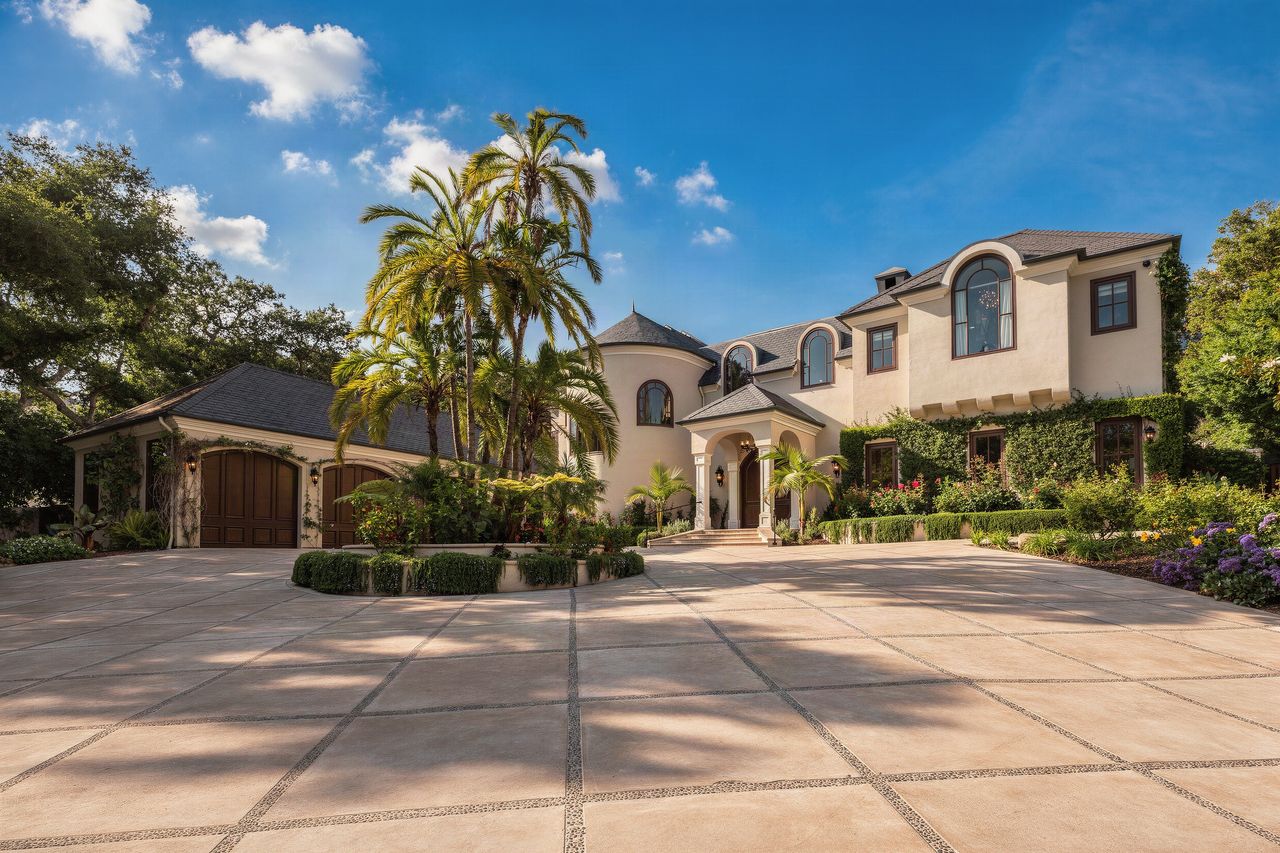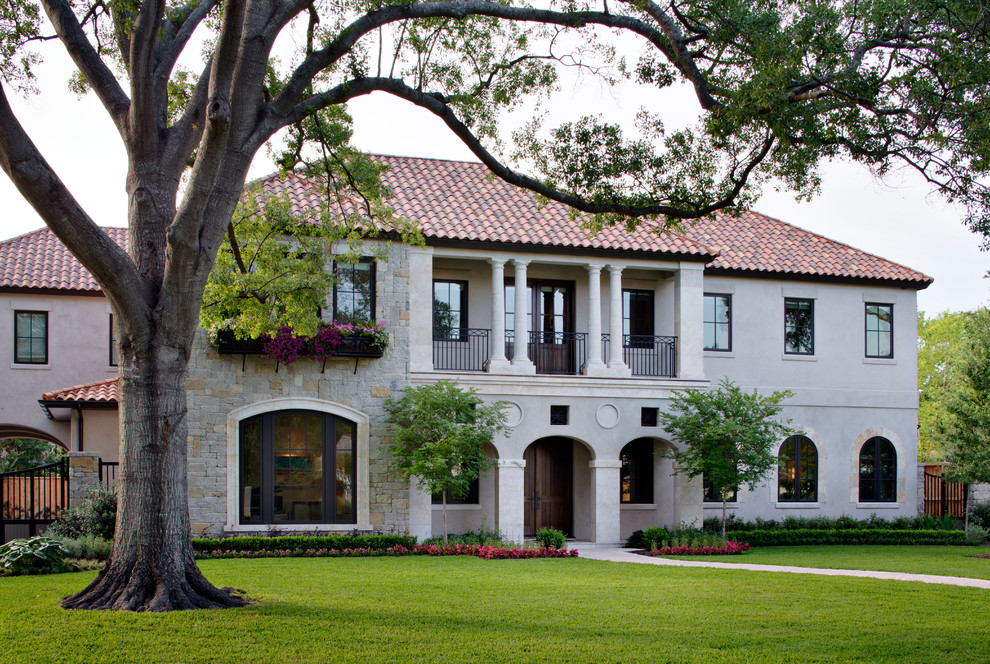
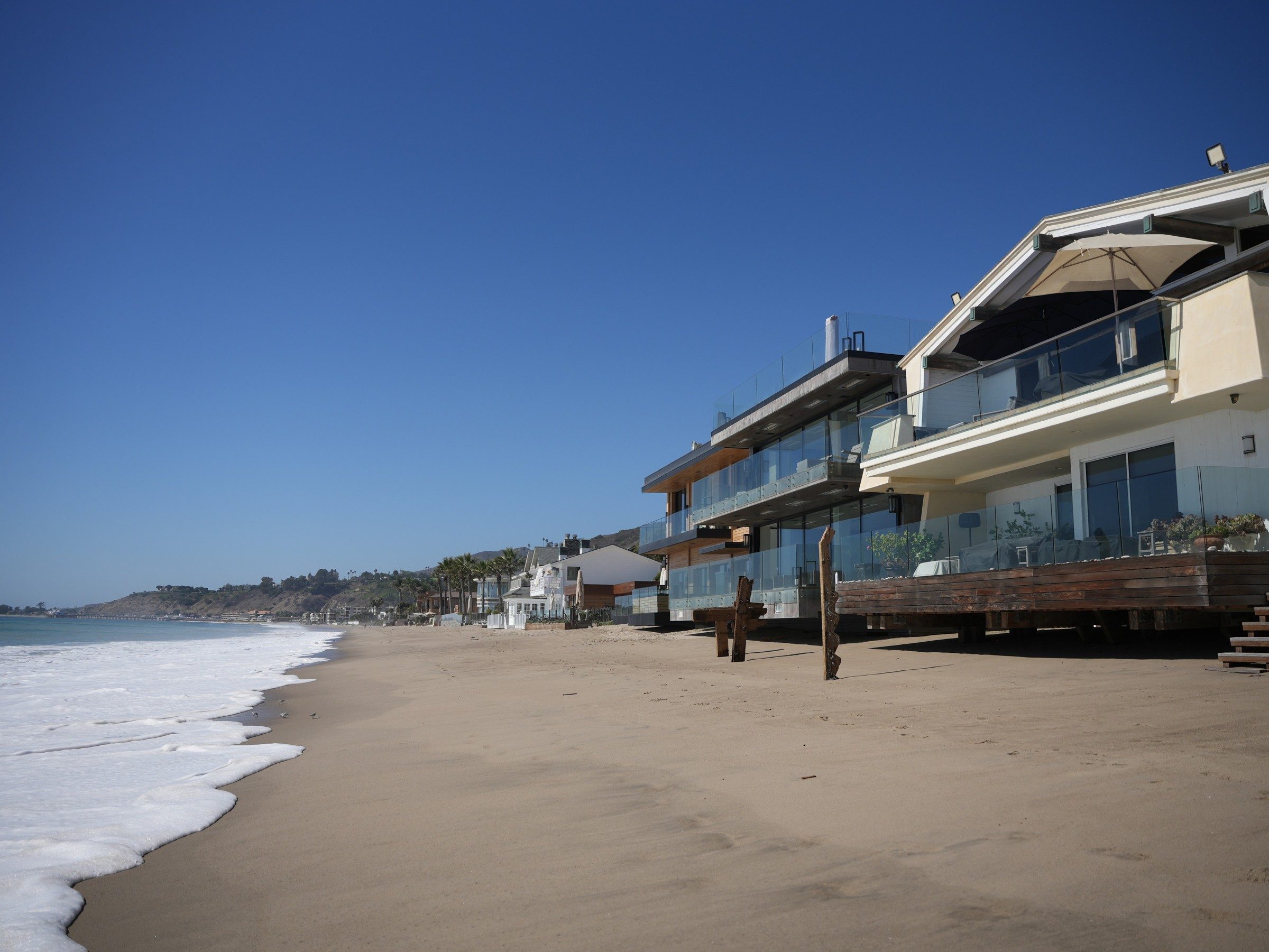
Beyoncé and Jay-Z paid $200 million for a concrete masterpiece above Paradise Cove, the most expensive home sale in California history at the time. A short distance east, Marc Andreessen spent about $255 million across three purchases in five months, stitching together a beachfront compound. Along Carbon Beach, Larry Ellison spent an estimated $200 million to $250 million collecting more than a dozen properties. Add it up: within a few miles of Malibu coastline, some of the wealthiest people on Earth have parked more than $700 million in beachfront real estate. Every one of those homes runs on a septic tank.
My name is Stephen White. I am a Luxury Estates Director with Christie's International Real Estate Southern California, serving greater Los Angeles and Ventura County. I walk these beaches with buyers, and I can tell you the question almost nobody asks at a showing is the one that matters most: what happens underground? Here is the answer, plainly. Malibu has no citywide sewer system. The priciest beachfront in America handles its wastewater the way a rural farmhouse does, one private system at a time, buried in sand and soil that scientists say is getting wetter from below. It is the story of the money on top of the sand, and the water rising underneath it.
The Fortresses All Face the Ocean
Beyoncé and Jay-Z bought their Paradise Cove compound in May 2023. The house is a minimalist concrete landmark designed by Tadao Ando, built over some 15 years by art collector William Bell Jr. on about eight acres above the beach. It held the California record until James Jannard's $210 million Malibu sale passed it in 2024.
Andreessen, the venture capitalist, moved fast. In October 2021 he paid $177 million for a near seven acre compound above Paradise Cove, a state record then. Five months later he added two Escondido Beach parcels for $44.5 million, then a neighboring beach house for $34 million. Three deals, about $255 million, one private stretch of coast.
Ellison started earlier and never really stopped. In 2004 and 2005 alone, the Oracle co-founder bought more than a dozen Malibu properties for over $180 million, including $65 million for five lots on Carbon Beach. Estimates of his total Malibu spending now run from $200 million to $250 million.
These are defended properties: gates, cameras, seawalls, engineers, and lawyers on retainer. Every defense faces outward, toward the ocean and the public. None of them addresses what is happening in the ground the houses stand on.
Malibu Has No Sewer. Let That Sink In.
There is no municipal sewer under Carbon Beach. There is none under Broad Beach or Paradise Cove either. Nearly every property in Malibu treats its own wastewater in an onsite system, and on the beachfront those systems are advanced treatment units, closer to miniature treatment plants than to the old septic tank most people picture. They carry operating permits, monitoring requirements, and price tags to match. City of Malibu figures put a typical replacement at $50,000 to $120,000, and $200,000 or more on the beachfront.
The single exception proves the rule. Around the Civic Center, state regulators documented sewage bacteria in the groundwater on its way to Malibu Lagoon and Surfrider Beach, and in 2009 the Los Angeles Regional Water Quality Control Board banned septic discharges there outright. The city built the Civic Center Water Treatment Facility, which opened in 2018 at a cost of about $60 million for its first phase. A second phase, at roughly $63 million more, is extending service to about 444 nearby properties. Call it a $125 million program. It serves one neighborhood. The billionaire beaches are not in it, and there is no funded plan to put them in it.
So the most valuable residential shoreline in the country flushes into the ground it stands on. That worked, more or less, for decades. The problem is the ground is changing.
What Is Happening Underground?
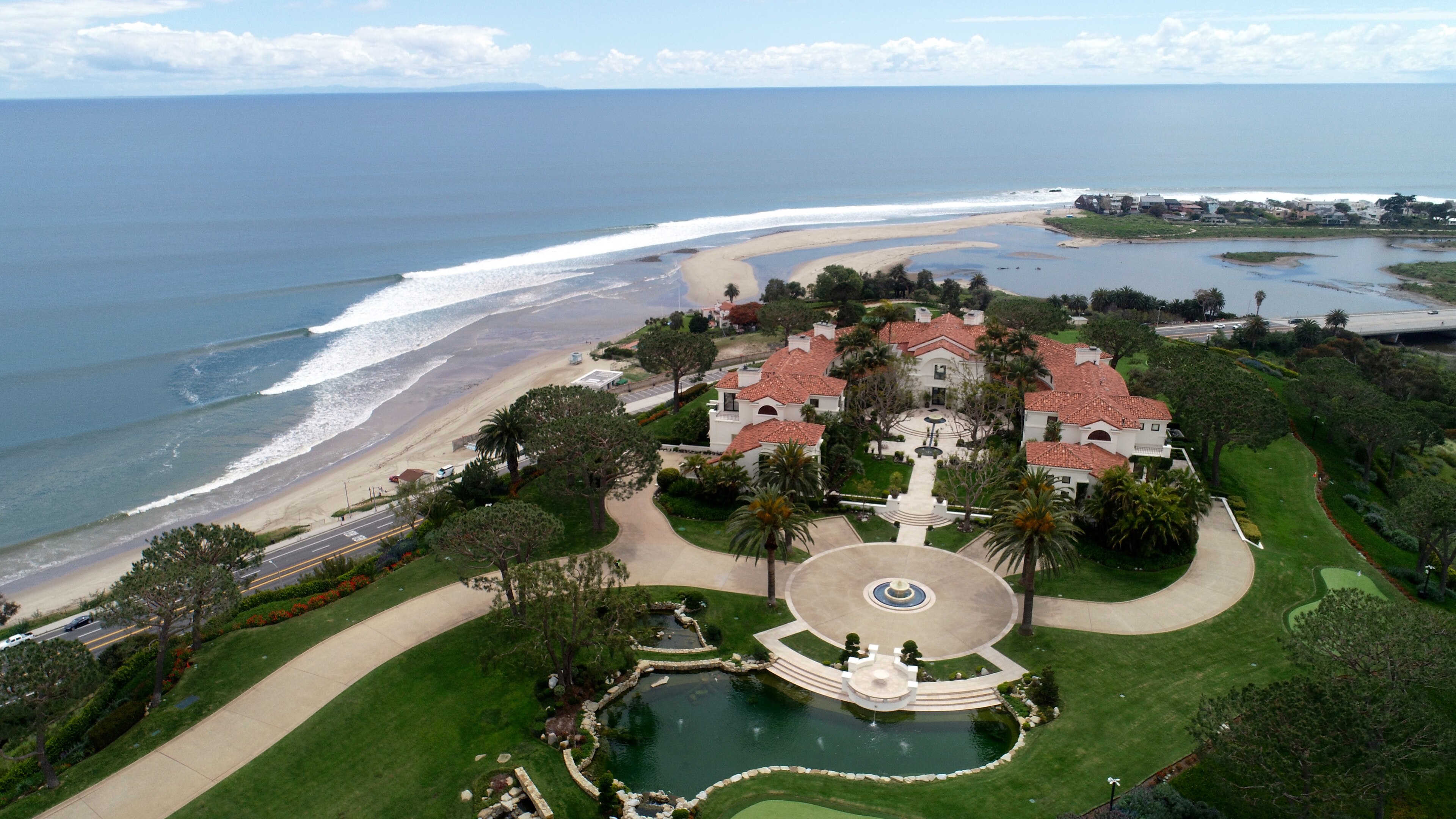
Start with what Malibu is. The city is a narrow terrace squeezed between the Santa Monica Mountains and the Pacific. The beachfront sits on marine terrace deposits, alluvial material washed down from the canyons, and in places the debris of old landslides. These are weakly consolidated sediments, sandy clays and silts, and they behave very differently wet than dry. Saturated soil loses strength. Bearing capacity drops. Foundations designed in drier decades can settle unevenly, a slow twisting engineers call differential settlement.
Now add the water table. A septic system only works if there is enough dry, unsaturated soil beneath it to finish the treatment job. A 2020 study in Nature Climate Change, co-authored by U.S. Geological Survey scientists, modeled exactly this coastline problem: as sea level rises, the shallow groundwater under the coast rises with it, a process called shoaling. The authors warned of reduced septic and sewer drainage, damage to buried infrastructure, and contamination moving through soils that used to sit safely above the water table, well inland of the flood maps everyone watches.
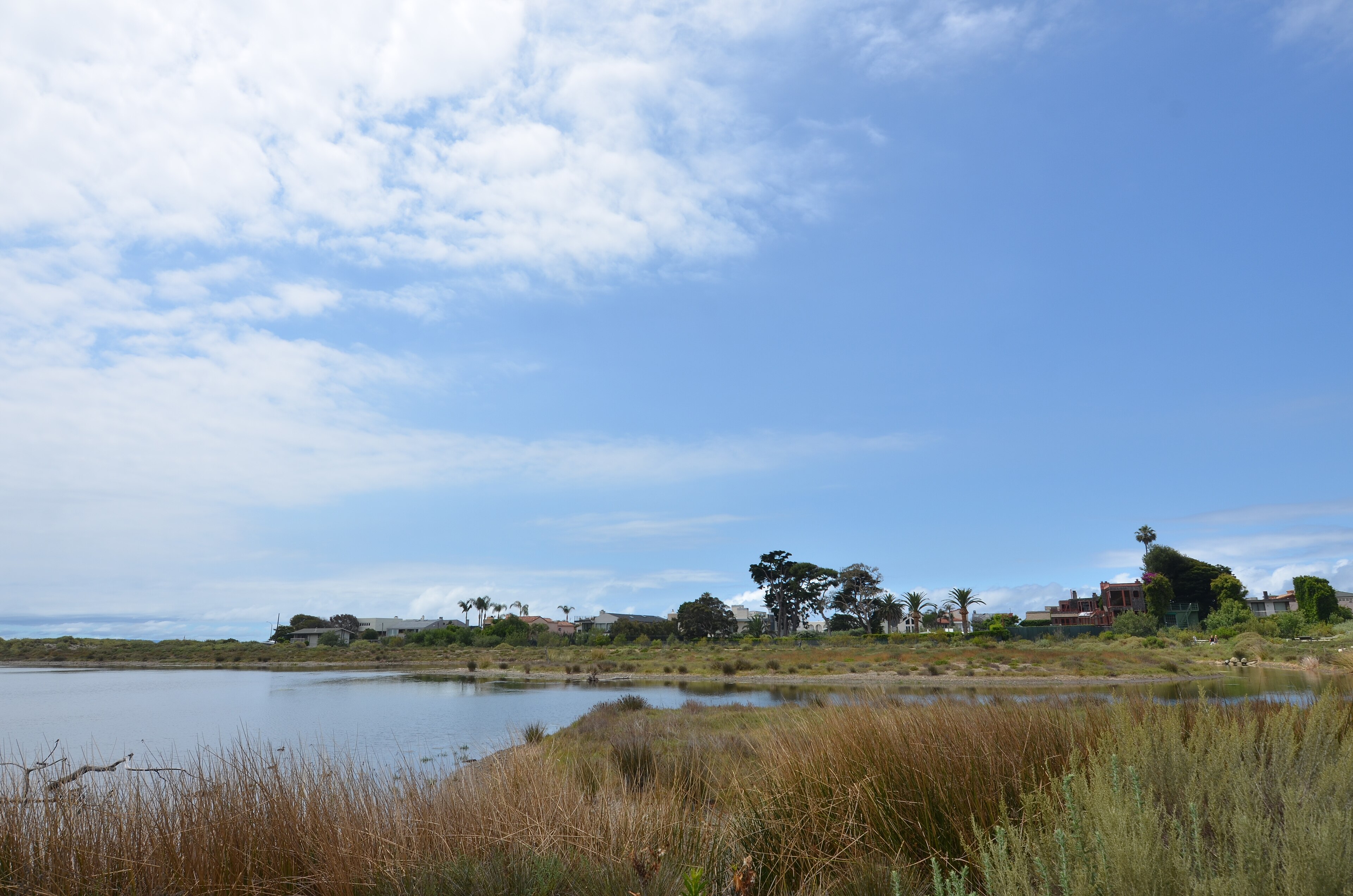
Malibu has already seen the preview. USGS researchers studying the Civic Center area found that treated wastewater from its 400-plus onsite systems made up more than a quarter of the recharge to the local aquifer, and that some monitoring wells were as much as 70 percent treated wastewater. That research, and the bacteria documented in groundwater connected to the beach, is why the state stepped in. Heal the Bay still grades Surfrider Beach, at the lagoon breach, an F in wet weather.
The ocean is the threat everyone photographs. The groundwater is the one quietly rewriting the engineering under the most expensive dirt in America.
The Fire Proved How Much Runs Through Septic
In January 2025, the Palisades Fire destroyed about 700 homes in Malibu, roughly a third of the city. When the rebuilding conversation started, it ran straight into wastewater. State officials counted at least 700 destroyed or badly damaged Malibu homes that relied on septic or cesspool systems. Every one of those rebuilds has to satisfy today's far stricter wastewater rules before a family can move back in.
Fire is fast and visible, and Malibu understands it. The rebuild is teaching a slower, less photogenic lesson: in Malibu, you do not simply own a house. You own a small utility, and its performance depends on geology you cannot see.
The Precedent Nobody Talks About
Malibu has already watched this movie once. When regulators documented sewage bacteria in the groundwater around the Civic Center, the state did not negotiate. In 2009 it banned septic discharges in that area outright, and the properties in the zone were required to hook up to the new treatment plant once it opened. That is the realistic endgame if the water table keeps rising under the beach colonies: not a quiet repair bill, but a mandate, on a timeline set by regulators rather than owners. The owners who come out best in that kind of shift are the ones whose systems are modern, permitted, and documented long before anyone forces the question.
The Money Is Still Coming
Here is the part that surprises people. The fire, the septic question, and the groundwater science have not emptied Malibu out. MLS figures put the single family median at $5.6 million in 2025 against $6.18 million in 2024, a dip of about 9 percent on roughly a fifth fewer sales, while the price per square foot for standing homes has held its ground. Read that correctly: burned lots and smaller sales drag the median, but intact homes are holding their value per foot. By the second quarter of 2026, sales had doubled off the fire-frozen months of 2025, and a Pacific Coast Highway home closed at $35 million.
The top never blinked. In 2025, months after the fire, a Grayfox Street property sold for $80 million, one of the ten most expensive home sales in America that year. On La Costa Beach, one investor paid more than $65 million for nine burned oceanfront lots. Burned lots across Malibu traded at 20 to 60 percent below pre-fire land values, and investors took 44 percent of the lot sales late in 2025, double their share a year earlier. That is new money betting on the rebuild, septic questions and all.
One more draw rarely gets mentioned: Malibu is not part of the City of Los Angeles, so Malibu sales sit completely outside the ULA mansion tax. The same $200 million sale inside Los Angeles would owe roughly $11 million in transfer tax at the top ULA tier. In Malibu the bill is zero. For buyers choosing between the westside and the coast, that difference is real money, and it is one more reason the money keeps landing here.
The rebuild is moving, slowly. Malibu issued its 100th rebuild construction permit in September 2026, and the first rebuilt home received its certificate of occupancy that same month, eleven months after its permit. Slow is not stopped. The buyers doing the math today are pricing the Malibu that comes back, not the one that burned.
What This Means for Malibu Value
None of this has scared the money away, and I do not expect it to. These lots are irreplaceable, the supply is fixed, and the buyer pool is global. I wrote recently that luxury is not crashing, it is freezing, and Malibu's top end is the clearest example: prices hold because there is nothing else like it.
But wastewater has become a real line item in value, and smart buyers treat it that way. A modern advanced system in good standing supports a price. A tired system, a failed percolation test, or a lot where the dispersal field has nowhere legal to go can take six figures and many months off a deal. Engineers, lenders, and insurers all ask about the system now, the same way they ask about the roof and the foundation. The risk does not erase Malibu's premium. It rewards the buyers who do the homework and quietly punishes the ones who fall in love with the view and skip the file.
What I Tell Every Coastal Buyer
Whether the price is $2 million or $200 million, the underground questions are the same. Before you buy on this coast, get answers to these:
- Pull the complete wastewater file: system type, age, operating permit status, and inspection history.
- Ask for the percolation and groundwater records, not just the seller's assurance that everything works.
- Budget honestly for replacement. On the beachfront, a new advanced system can run $200,000 or more.
- Check whether the property sits in any current or planned sewer service area, and what connection would cost.
- If you plan to rebuild or expand, confirm the wastewater rules you will be held to before you price the land.
Malibu will always be Malibu. The light, the water, and the scarcity are real, and so is the value. My job is to make sure my clients see the whole property, including the part no drone photograph shows. If you are thinking about buying or selling on this coast, or want to know what your home is worth in a market where details matter, start with a proper valuation at What's My Property Worth and a conversation. I am happy to walk the property with you, above ground and below.
Frequently Asked Questions
Does Malibu have a sewer system?
Not citywide. Malibu's only centralized plant, the Civic Center Water Treatment Facility, opened in 2018 and serves the Civic Center area, with a second phase adding about 444 nearby properties. Carbon Beach, Broad Beach, Paradise Cove, and the rest of the city use private onsite wastewater treatment systems.
How much does a septic system cost in Malibu?
City of Malibu figures put a typical advanced system replacement at $50,000 to $120,000, plus design and permitting, and $200,000 or more for beachfront properties. Operating permits and monitoring add ongoing cost.
What did Beyoncé and Jay-Z pay for their Malibu house, and where is it?
They paid $200 million in May 2023 for a Tadao Ando designed compound above Paradise Cove. It was the most expensive home sale in California history at the time.
How does rising groundwater damage a septic system?
A septic or advanced treatment system needs dry, unsaturated soil below the dispersal field to finish treating wastewater. As sea level rise lifts the coastal water table, that buffer shrinks. Effluent gets less treatment, systems drain poorly or fail, and in the lowest spots groundwater can reach the surface.
Does the septic issue make Malibu beachfront a bad investment?
No. The scarcity is real and demand at the top remains deep. It does mean wastewater belongs in the same due diligence conversation as the foundation, the roof, and the seawall, because replacing a system is expensive and heavily permitted.
Sources
- Realtor.com, The Most Expensive Homes Ever Sold in the U.S. (Beyoncé and Jay-Z, $200 million; Andreessen, $177 million)
- Shen Realty, Malibu's New Power Buyers (Andreessen's three purchases totaling about $255 million)
- Befus et al., Nature Climate Change (2020), via the University of Arkansas
- U.S. Geological Survey, Izbicki et al., Sources of fecal indicator bacteria to groundwater, Malibu Lagoon and the near-shore ocean
- Los Angeles Regional Water Quality Control Board, Malibu Civic Center septic prohibition memorandum
- Water & Wastes Digest, Civic Center Water Treatment Facility profile
- City of Malibu, Civic Center Water Treatment Facility Phase Two council item
- Realtor.com News, Malibu wildfire lawsuit coverage (about 700 homes destroyed)
- Redfin, Malibu housing market data
- Shen Realty, Malibu house prices (MLS data: full-year median and sales counts)
- USA Today, the most expensive U.S. home sales of 2025 (Redfin ranking)
- Claims Journal / Bloomberg, Malibu beachfront and burned-lot sales data
- City of Malibu, 100th rebuild permit news release